Demand and capacity
Local cuisine, price and service gaps are reviewed alongside kitchen capacity, delivery area, team capability and unit economics.
Retroo Kitchen operating model
Retroo Company runs physical restaurants, cloud kitchens, kitchen-in-kitchen operations and mobile kitchens through shared standards for brands, recipes, supply, training, service and control. Each location runs only the brands suited to its capacity and proven demand.
From setup to daily management
Local cuisine, price and service gaps are reviewed alongside kitchen capacity, delivery area, team capability and unit economics.
The right brands are selected, followed by menus, recipes, approved products, packaging, equipment, training and the launch flow.
Retroo's own team or an independent operator prepares orders under shared recipe, product, packaging, capacity and service rules.
Availability, acceptance, preparation time, accuracy, refunds, ratings, repeat orders, sales and margin are tracked, and proven brands are expanded in stages.
Retroo Kitchen
The format and number of brands are selected separately for each location, based on kitchen capacity, local demand, delivery potential, the available team and fixed costs.
Physical restaurant
A location with a customer dining room and a primary restaurant brand. If kitchen capacity allows, the same team can also prepare orders for additional delivery brands.
Cloud kitchen
There is no customer dining room. One kitchen uses shared equipment, stock and staff to prepare takeaway and delivery orders for several brands.
Kitchen-in-kitchen
An operating restaurant uses spare kitchen capacity to prepare orders for selected Retroo brands. Brand use, recipes, training and responsibilities are defined in the agreement.
Mobile food caravan
Production and sales equipment are installed inside the caravan. The menu is kept focused to match its capacity, while placement, operating period and permits are planned for each location.
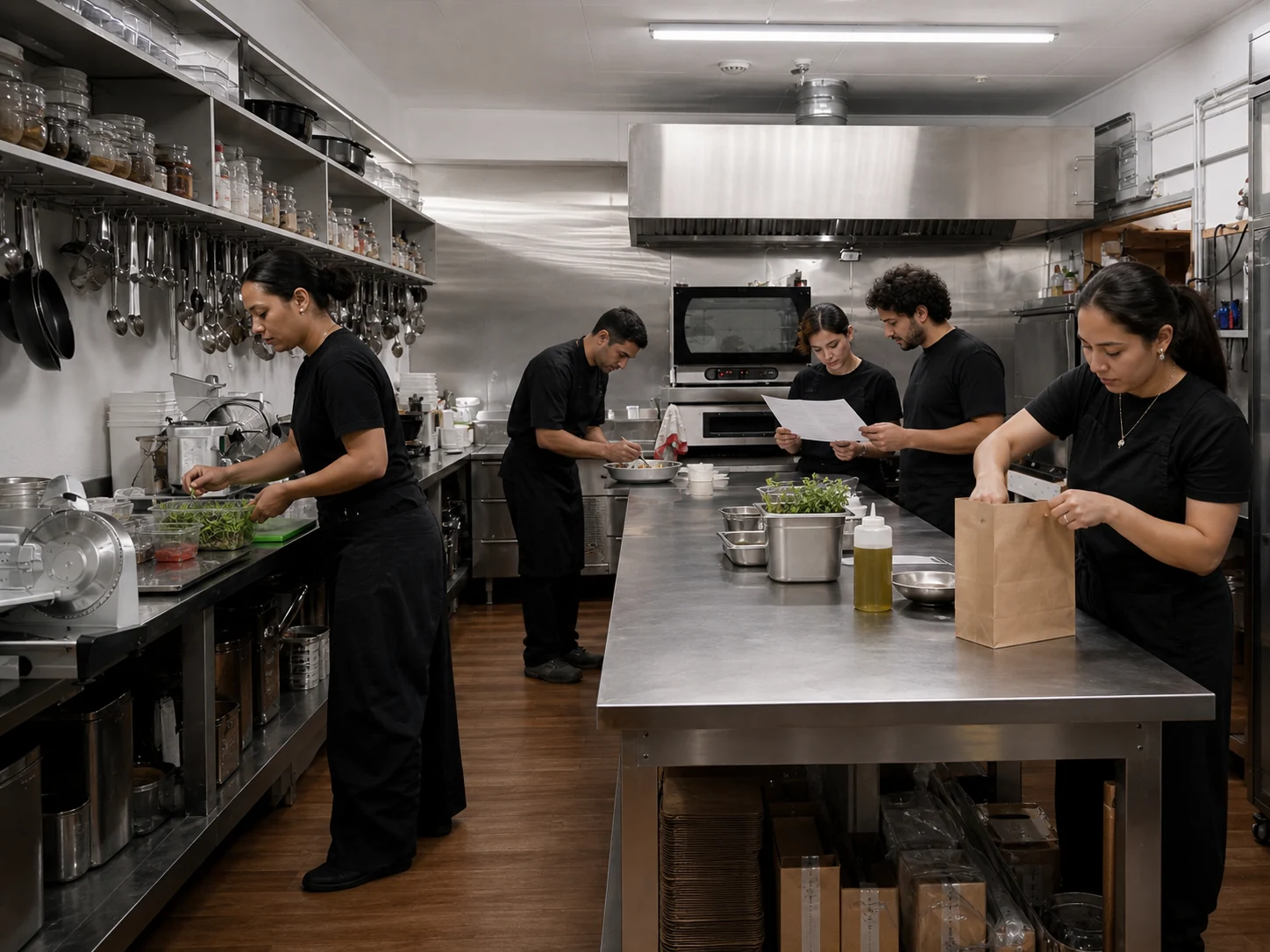 Recipe · production · packing · control
Central team support
Recipe, portion, pricing and presentation standards are defined for each concept.
Brand, production-station and shift plans are matched to each kitchen's capacity.
Opening training, food-safety practices and field checks are managed under one operating standard.
Shared product lists, recipe costs and supplier coordination are managed across the kitchen network.
Delivery-platform menus, campaigns, local content and brand visibility are planned together.
Sales, platform commissions, food costs, labour and cash flow are monitored by location.
Financial monitoring
Dine-in, takeaway and platform sales are reported alongside VAT, commissions, advertising, refunds, ingredients, labour and rent. Statutory accounts are handled by an external accounting provider, while the Retroo team coordinates operating reports.

Restaurant operations system
RetrooPOS is being developed to bring orders, the kitchen display, menu management, stock control and operating reports into one workflow. The product is currently in development and pilot planning.
What is RetrooPOS? →